Yok Yek Oei (โยกเยกเอย): meaning and key lines
Traditional, author unknown
What the song is about
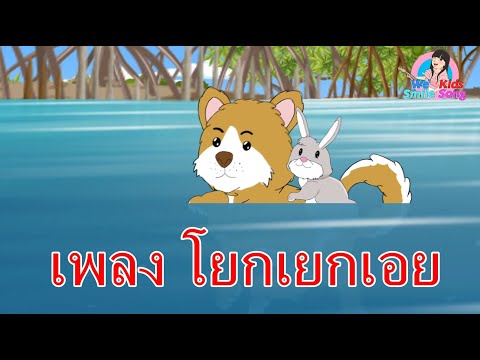
โยกเยกเอยyôok-yêek oei, “Yok Yek Oei (Rock-a-bye, a Thai Lullaby)”, is a Thai children's song by an unknown author. The lullaby Thai grown-ups sing while rocking a baby, and the rocking game children play sitting face to face: a flood rises to the clouds, a rabbit swims with its head above water and a curly-tailed dog hugs its neck as they rock. The whole rhyme is five short phrases, it's in the public domain, and it teaches the cloud, the flood, a rabbit, a dog's tail and a hug.
Free, no sign-up: learn the key lines and words with audio, then sing along.
Song facts
- Words
- Traditional, author unknown (sung here by We Kids Smile Song)
- Style
- Children's song
- Level
- A1 (beginner)
- Mood
- gentle, rocking, sleepy
- Views
- about 7.7M (Oct 2026)
- Video
- We Kids Smile Song (verified kids' channel)
- Lyrics
- Public domain
Key lines, explained
Tap a line to hear it. Once the video is playing, lines jump to their moment in the song.
- โยกเยก yôok-yêekเอย oeiน้ำท่วม náam-tûamเมฆ mêek
Rock-a-bye, oh, the flood is up to the clouds,
โยกเยกyôok-yêek = to rock, to sway gently from side to side, the movement of the whole song. เอยoei is the 'oh' that old songs and lullabies use to call out or end a phrase. น้ำท่วมnáam-tûam = a flood, to be flooded (น้ำnáam water + ท่วมtûam to cover, to flood), and เมฆmêek = cloud: a flood so high it reaches the clouds. - กระต่าย grà-dtàaiลอยคอ lawy-kawหมา mǎaหาง hǎangงอ ngaw
the rabbit swims with its head above the water, the dog with the curly tail
กระต่ายgrà-dtàai = rabbit. ลอยคอlawy-kaw = to float with just your head out of the water, literally 'float the neck' (ลอยlawy = to float, คอkaw = neck). หมาmǎa = dog, with a rising tone; with a high tone, ม้าmáa is a horse. หางhǎang = tail and งอngaw = bent, curled: หมาหางงอmǎa hǎang ngaw = a dog with a curled tail. - กอดคอ gàwt-kawโยกเยก yôok-yêek
hugs it round the neck, and they rock.
กอดคอgàwt-kaw = to put your arms around someone's neck or shoulders, how Thai friends walk together (กอดgàwt = to hug, คอkaw = neck). The rhyme ends where it began, on โยกเยกyôok-yêek, so it can go round and round until the baby falls asleep: this video sings it nine times.
Words you'll learn
- เมฆ mêek
cloud
- กระต่าย grà-dtàai
rabbit
- หมา mǎa
dog
- กอดคอ gàwt-kaw
to put your arms round someone's neck
- โยกเยก yôok-yêek
to rock, to sway gently
- น้ำท่วม náam-tûam
flood; to be flooded
Some years the Ping River rises and low parts of Chiang Mai flood: check the news before you go out.
- ลอยคอ lawy-kaw
to float with your head above water
- หาง hǎang
tail
- งอ ngaw
bent, curled
- เอย oei
oh … (calling to someone, in songs and poems)
Grammar in this song
Describing words follow the noun, even a whole little sentence. หมาหางงอmǎa hǎang ngaw is literally 'dog, tail curled': a dog whose tail is curled. Thai describes people and animals this way all the time: ผู้หญิงผมยาวpûu-yǐng pǒm yaao (a woman with long hair, 'woman, hair long'), แมวตาสีฟ้าmaew dtaa sǐi fáa (a blue-eyed cat).
Body parts in verbs. Thai builds many verbs from a body part: ลอยคอlawy-kaw (to float, neck out of the water), กอดคอgàwt-kaw (to hug round the neck), ก้มหน้าgôm-nâa (to look down, 'bow the face'), ส่ายหัวsàai-hǔa (to shake your head).
The culture behind it
A lullaby and a game. Thai lullabies, เพลงกล่อมเด็กpleeng glàwm dèk, were made up by ordinary villagers and passed on by heart, and this is one of the best known (Thai Junior Encyclopedia). A mother or grandmother sings it slowly, rocking a baby in her arms or in a cradle. Bigger children play it as a game: two of them sit face to face holding each other's waists and rock forwards and backwards in time with the words (a 1998 book of old Thai children's games, quoted by NECTEC's SchoolNet library).
Families sing small variations: the animals may ride on each other's necks instead of hugging, and the curly-tailed animal is not always a dog. Thai Wikipedia even lists the rhyme among the echoes of the world's great flood legends. This recording is by We Kids Smile Song, a verified Thai children's channel, which sings the whole rhyme nine times over, the way you would to get a baby to sleep.
Learn “Yok Yek Oei” in about 6 minutes
Hear each key line, learn its words with audio and fill the gaps as you sing along. Free, no sign-up needed.
More songs to learn Thai



Written by the Learn Thai For Free team
Audio: AI voices, quality-checked for tones