
Unit 15 · Settling in · A2
Unit 15: Have you eaten yet?
Talk about meals and Northern food, say what's done and what isn't yet, describe tastes and order with allergies in mind.
6 lessons · about 46 min CEFR A2
The story
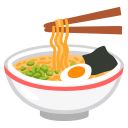
Fon takes you to lunch at her mother's small family restaurant near Chiang Mai University. Mae Noi greets you the Thai way, with 'have you eaten yet?', and starts feeding you khao soi.
After this unit
- I can ask and answer 'have you eaten yet?' and say what I've already done or not done yet.
- I can say I've just done something.
- I can describe how food tastes (sour, salty, bland) and ask for a recommendation.
- I can mention allergies and things I don't eat when I order.
The 6 lessons
Each lesson takes 5-10 minutes. Read it here, then practise it in the app: free, no sign-up.
- Lesson 1 · Words Meals and Northern food 7 min · free
- Lesson 2 · Words Cooking, tastes; already and not yet 7 min · free
- Lesson 3 · Pattern Already, not yet, just: แล้ว, ยัง, เพิ่ง 8 min · free
- Lesson 4 · Conversation Conversation 8 min · free
- Lesson 5 · Speaking Speaking 8 min · free
- Lesson 6 · Checkpoint Checkpoint 8 min · free
Words and phrases in Unit 15
Tap the speaker to hear each one. Tap any Thai word to see what it means.
Meals and Northern food
Lesson page- ข้าวเช้า kâao-cháao
breakfast noun
Meals are named after rice ('morning rice', 'noon rice', 'evening rice'), so กินข้าวเช้าgin kâao-cháao is to have breakfast.
- ข้าวเที่ยง kâao-tîang
lunch noun
- ข้าวเย็น kâao-yen
dinner noun
เย็นyen here is the evening of ตอนเย็นdtawn-yen, not 'cold'.
- ข้าวซอย kâao-sawy
khao soi (Chiang Mai's curry noodle soup) noun · classifier ชาม
Egg noodles in a coconut curry broth, topped with crispy fried noodles, with pickled greens, shallots and lime on the side: Chiang Mai's signature dish.
- ข้าวเหนียว kâao-nǐaw
sticky rice noun
The everyday rice of the North and Isan, eaten with your fingers; ข้าวเหนียวมะม่วงkâao-nǐaw má-mûang is mango sticky rice.
- น้ำพริก náam-prík
chilli dip, chilli paste noun
Every region has its own; Chiang Mai's น้ำพริกหนุ่มnáam-prík nùm is a smoky dip of grilled green chillies, eaten with sticky rice and fresh vegetables.
- เนื้อสัตว์ núea-sàt
meat noun
On its own, เนื้อnúea usually means beef; vegans look for the yellow flags marked เจjee.
- อาหารทะเล aa-hǎan-tá-lee
seafood noun
- น้ำตาล náam-dtaan
sugar noun
It's also the colour brown, สีน้ำตาลsǐi náam-dtaan: sugar-coloured.
- ถั่วลิสง tùa-lí-sǒng
peanuts noun
ถั่วtùa on its own means any bean or nut; peanuts hide in pad thai, som tam and satay sauce.
- ผงชูรส pǒng-chuu-rót
MSG (monosodium glutamate) noun
Literally 'flavour-lifting powder'; many restaurants put up a sign saying ไม่ใส่ผงชูรสmâi sài pǒng-chuu-rót (no MSG added).
- แพ้ páe
to be allergic to verb
Put the thing straight after it, as in แพ้ถั่วลิสงpáe tùa-lí-sǒng (allergic to peanuts); it also means 'to lose' a game or a match.

Cooking, tastes; already and not yet
Lesson page- ผัด pàt
to stir-fry; stir-fried verb
ข้าวผัดkâao pàt is fried rice, and ผัดไทยpàt tai is pad thai: literally 'Thai stir-fry'.
- ทอด tâwt
to deep-fry; fried verb
ไก่ทอดgài tâwt is fried chicken and ไข่ทอดkài tâwt a fried egg, though the crispy one on top of your rice is usually called ไข่ดาวkài-daao ('star egg').
- ต้ม dtôm
to boil; boiled; a clear soup verb
Many soups are named after it, like the famous hot and sour ต้มยำdtôm-yam.
- เปรี้ยว bprîaw
sour adjective
Lime, tamarind and green mango give Thai food its เปรี้ยวbprîaw kick.
- เค็ม kem
salty adjective
What usually makes Thai food salty is fish sauce, น้ำปลาnáam-bplaa, not salt.
- จืด jùuet
bland, not salty enough adjective
Too จืดjùuet? Season it yourself: noodle stalls put fish sauce, sugar, chilli flakes and chilli vinegar on every table.
- แนะนำ náe-nam
to recommend; to introduce verb
It also means 'to introduce': แนะนำตัวnáe-nam dtua is to introduce yourself.
- สั่ง sàng
to order (food, online) verb
Ordering a delivery on LINE MAN or Grab is สั่งsàng too; สั่งอาหารsàng aa-hǎan is to order food.
- โต๊ะ dtó
table noun · classifier ตัว
Restaurants count people, not tables: for a table for two, just say สองคนsǎwng kon.
- ยัง yang
still; (not) yet adverb
With ไม่mâi it means 'not yet' (ยังไม่อิ่มyang mâi ìm not full yet), with an adjective 'still' (ยังหิวyang hǐu still hungry), and on its own it's the answer 'not yet'.
- หรือยัง rǔue-yang
…yet? (or not yet?) question word
It goes at the end, like ไหมmǎi. Answer with the verb + แล้วláew (yes, already) or with ยังyang (not yet).
- เพิ่ง pôeng
just (a moment ago), only just adverb
It goes before the verb: เพิ่งมาถึงpôeng maa tǔeng (I've just arrived).
Grammar: Already, not yet, just: แล้ว, ยัง, เพิ่ง
- กิน ginแล้ว láew
I've eaten.
- สั่ง sàngแล้ว láew
We've ordered.
- อาหาร aa-hǎanมา maaแล้ว láew
The food's here.
Dialogue: Lunch at Mae Noi's
Lunchtime at Mae Noi's small family restaurant near Chiang Mai University. Fon brings you straight from your language exchange, and her mother hurries out of the kitchen to meet you.
13 lines · tap a line to hear it
-
Mae Noiแม่น้อย
สวัสดี sà-wàt-diiจ้ะ jâกิน ginข้าว kâaoหรือยัง rǔue-yangจ๊ะ jáHello, dear! Have you eaten yet?
-
You
ยัง yangไม่ mâiได้ dâiกิน ginครับ krápNot yet, I haven't eaten.
Men ยังไม่ได้กินครับ Women ยังไม่ได้กินค่ะ
-
Fonฝน
เรา raoเพิ่ง pôengเรียน rianเสร็จ sètค่ะ kâแม่ mâeWe've just finished our lesson, Mum.
-
Mae Noiแม่น้อย
แนะนำ náe-namข้าวซอย kâao-sawyจ้ะ jâแม่ mâeทำ tamเอง eengI recommend the khao soi, dear. I make it myself.
Culture note: 'Have you eaten yet?' and the food of the North
Thais greet friends, neighbours and colleagues with กินข้าวหรือยังgin kâao rǔue-yang (have you eaten yet?). It isn't an invitation: it's a way of saying 'I care about you'. The easy answer is กินแล้วgin láew, even if you only had a snack. Say ยังyang (not yet) to someone like Mae Noi, though, and she'll start cooking.
Up north, the food changes too. ข้าวซอยkâao-sawy is Chiang Mai's famous curry noodle soup. น้ำพริกหนุ่มnáam-prík nùm, a smoky dip of grilled green chillies, comes with fresh vegetables and crispy pork skin. ข้าวเหนียวkâao-nǐaw (sticky rice) arrives in a little woven basket: take a pinch, roll it into a ball with your fingers and dip it.
Want to make a Northern cook smile? Instead of อร่อยà-ràwy, say ลำlam, the word for 'delicious' in Northern Thai (Kham Mueang).
AI role-play: Lunch at Mae Noi's
At the end of the unit you talk with Mae Noi, an AI character who answers in natural Thai and helps when you get stuck.
The scene
Fon's mother, Mae Noi, runs a small restaurant near Chiang Mai University and loves feeding people. She wants to know if you've eaten and what you'd like.
Mae Noi starts
Hello, dear! Have you eaten yet?
Your goals
- 1Say whether you've eaten yet
- 2Ask what she recommends and order a Northern dish
- 3Say how you like it and mention a food allergy
- 4Say you've just eaten or you're full, and thank her